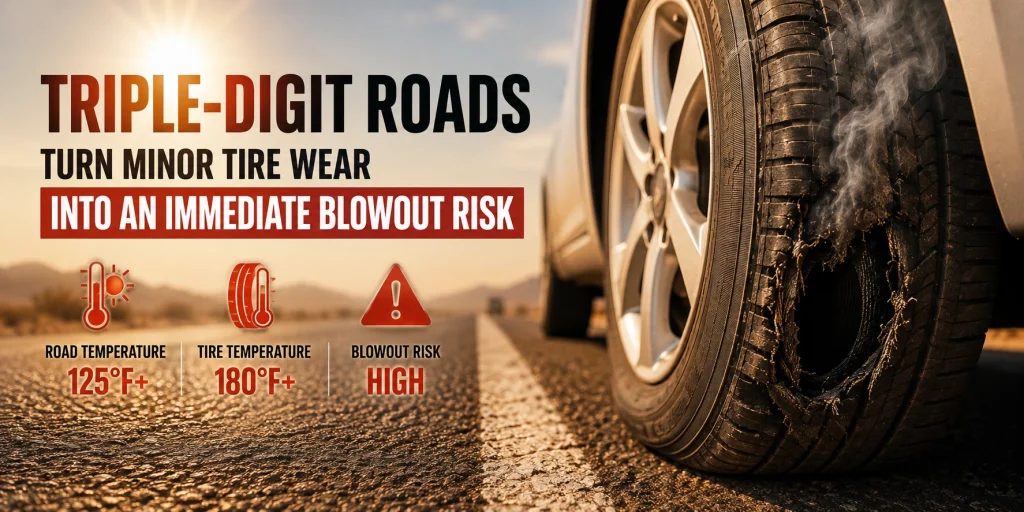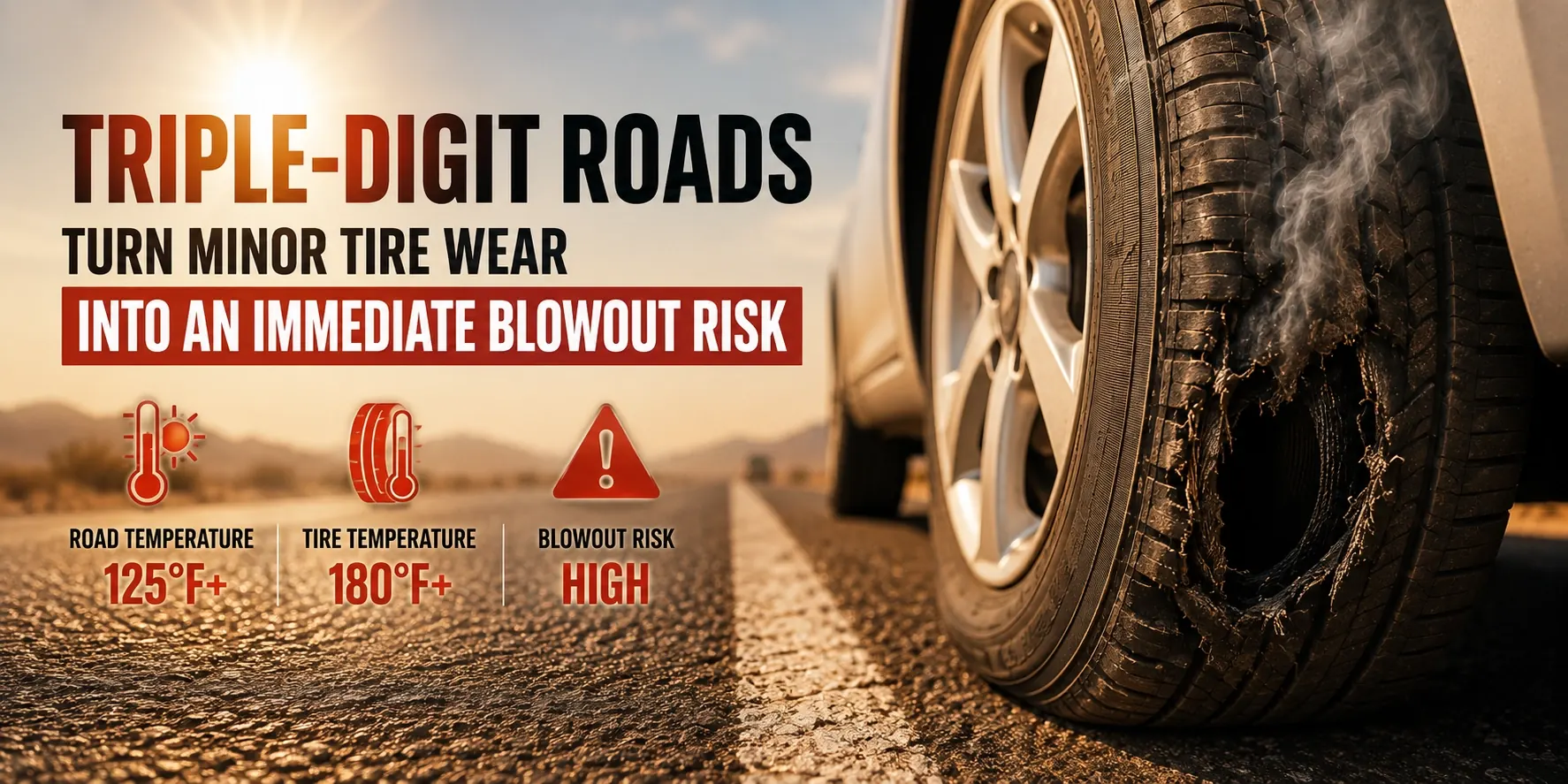
When the weather forecast predicts a summer afternoon temperature close to 100 degrees, most people think about heading to the local pool or turning up the home air conditioning. But down at Davenport Motor Company, our team of mechanics starts thinking about the highway asphalt. While the summer sun feels plenty hot to your skin, black asphalt absorbs solar radiation all day, easily pushing pavement temperatures into the triple digits.
Driving on roads that hot is the ultimate trial by fire for your vehicle. While your engine cooling system is working overtime under the hood, your tires are fighting a quiet battle against the pavement. Extreme heat acts like a magnifying glass on rubber, transforming minor tire wear into an immediate blowout risk.
The Crucial Difference Between a Flat Tire and a Blowout
A flat tire is a slow, progressive loss of air pressure. It often triggers a dashboard warning light and gives you time to safely pull off the road.
A blowout is an explosive, instantaneous structural failure of the tire wall. There is no slow leak. The tire ruptures with a loud bang, stripping away steering control in a fraction of a second.
How Sizzling Asphalt Triggers Structural Ruptures
Triple-digit road heat combines internal air expansion with rubber degradation. As tires roll across sizzling asphalt at highway speed, the air inside expands rapidly. At the same time, heat softens rubber compounds and weakens the internal bonding materials that hold tire layers together.
The Pressure Spike: For every ten-degree increase in temperature, tire pressure climbs by roughly one pound per square inch. On a scorching day, a tire can become severely over-inflated just from driving.
The Breakdown of Adhesives: Tires contain rubber layers, steel belts, and fabric cords held together by specialized adhesives. Extreme road heat weakens those bonds.
Targeting the Weakest Link: A small sidewall scrape, shallow dry-rot crack, or uneven tread pattern becomes a structural weak point under heat and pressure.
How to Defend Your Ride Against the Heat
Check tire pressure in the morning when the rubber is cool. Inflate tires to the specification listed inside the driver’s door frame, not the maximum pressure stamped on the sidewall.
Run your hand along the inside and outside sidewalls to feel for bulges, bubbles, or deep cracks. A bubble means the internal belts have failed and the tire needs immediate replacement.
Let the Team at Davenport Motor Company Verify Your Safety
Your safety depends on four patches of rubber keeping you connected to the pavement. We inspect tread depth, analyze wear patterns, check sidewalls for hidden heat damage, and set air pressures correctly.
Bring your vehicle by soon, or give us a call to schedule your comprehensive summer tire safety check.